
This trauma-informed care principles guide explains safe, supportive healing practices.
Care focuses on trust, respect, and emotional safety. These principles support recovery across mental health and healthcare settings. A trauma-informed approach reduces harm and builds resilience. Local care in Newnan, GA, follows these evidence-based standards.
Understanding Trauma-Informed Care and Why It Matters
Trauma affects thoughts, emotions, and daily behavior. After years of clinical experience, one truth remains clear. Healing improves when care feels safe. Trauma-informed care acknowledges how past experiences influence current responses. This model avoids re-traumatization. It supports dignity and empowerment instead.
In trauma-informed care in healthcare, providers shift perspective. The question changes from “what is wrong” to “what happened.” This change builds trust. It also improves engagement and outcomes. A trauma-informed approach helps people feel respected, heard, and supported throughout treatment. These principles now guide effective mental health services in Newnan, GA.
Core Principles That Guide Trauma-Informed Practice
Every trauma-informed system follows clear standards. These principles shape how care feels and functions. Experience shows that consistency matters most.
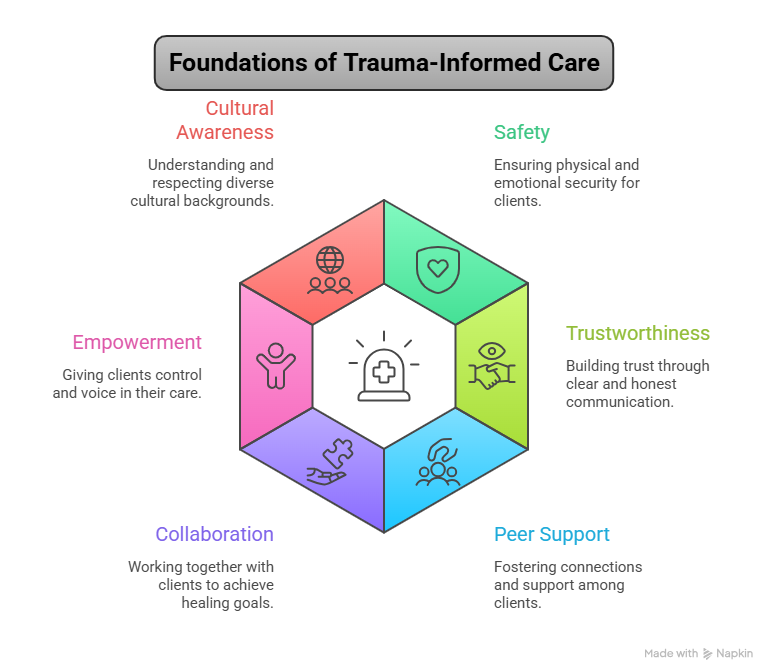
Trauma-informed care core principles include:
- Safety in physical and emotional spaces
- Trustworthiness through clear communication
- Peer support that builds connection
- Collaboration between provider and client
- Empowerment through choice and voice
- Cultural awareness and sensitivity
These trauma-informed care principles in mental health create stability. Care becomes predictable and respectful. Over time, this environment supports healing, self-regulation, and long-term emotional growth.
Applying Trauma-Informed Care Across Treatment Settings
Trauma-informed practices work across many environments. Mental health programs, medical clinics, and community services all benefit from this approach. The approach stays flexible and responsive. Care adapts to individual needs rather than forcing rigid systems.
In therapy settings, clinicians carefully pace their sessions. Language stays supportive and clear. Boundaries remain consistent. In medical care, consent and transparency guide every step. These adjustments reduce anxiety and increase trust.
Here is a simple overview:
| Setting | Trauma Informed Focus |
| Mental Health | Emotional safety and regulation |
| Medical Care | Consent and clear communication |
| Community Services | Respect and cultural awareness |
This alignment strengthens outcomes and reduces disengagement.
A Step-by-Step Guide to Trauma-Informed Care
A trauma-informed care step-by-step guide helps providers stay consistent. Each step builds on the next. This structure reduces overwhelm and confusion.
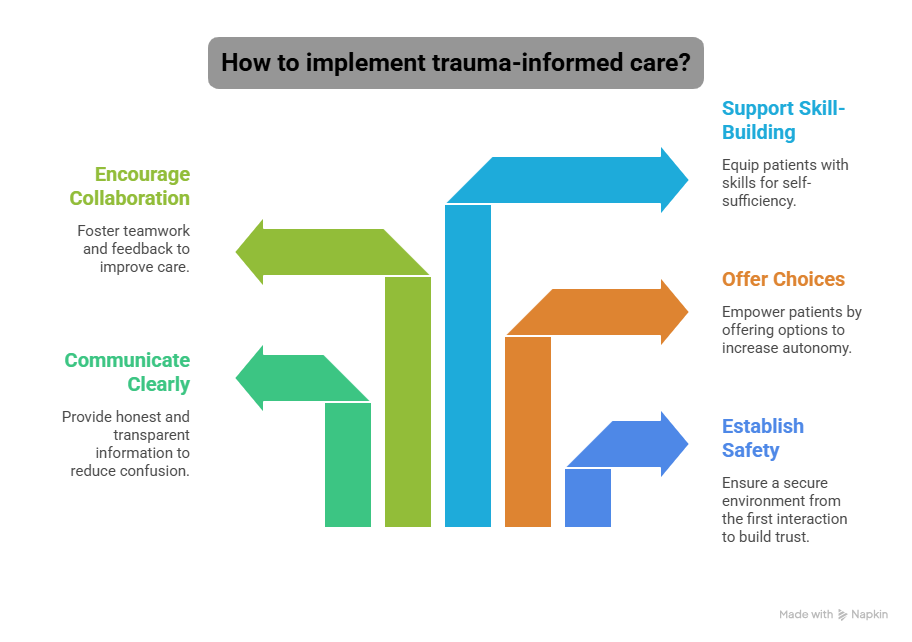
Key steps include:
- Establish safety from the first interaction
- Communicate clearly and honestly
- Offer choices whenever possible
- Encourage collaboration and feedback
- Support skill-building and autonomy
Following trauma-informed approach principles creates stability. Care feels predictable. Trust grows over time. This process supports healing without the use of pressure or force. Many programs in Newnan now follow this structured model to improve engagement.
How Trauma-Informed Care Supports Long-Term Healing
Healing requires more than symptom relief. Trauma-informed care focuses on lasting change. Experience shows better outcomes when people feel respected and empowered. Emotional regulation improves. Coping skills strengthen.
A consistent application of trauma-informed care principles fosters resilience. Stress responses decrease. Engagement increases. Over time, confidence replaces fear. This approach helps individuals rebuild trust in care systems and in themselves.
Top 5 FAQs About Trauma-Informed Care
What is trauma-informed care?
It recognizes the impact of trauma on behavior and emotions. Care focuses on safety and respect.
Where is trauma-informed care used?
It applies in the fields of mental health, healthcare, and community services.
Why are trauma-informed care principles important?
They reduce re-traumatization and improve treatment outcomes.
How does trauma-informed care differ from traditional care?
The focus shifts from symptoms to lived experiences.
Does trauma-informed care work for everyone?
It benefits people with known or unknown trauma histories.
Trauma-Informed Care at Magnolia Wellness
Magnolia Wellness integrates trauma-informed care principles into every level of treatment.
Care remains compassionate, structured, and evidence-based. Programs support emotional safety, empowerment, and long-term recovery. Each plan reflects real-life needs within the Newnan community.
Support begins with a conversation. For trauma-informed services in Newnan, GA, connect today.
Phone: 404-738-8149
Email: info@magnoliawellnessga.com
Healing starts with safe, informed care.